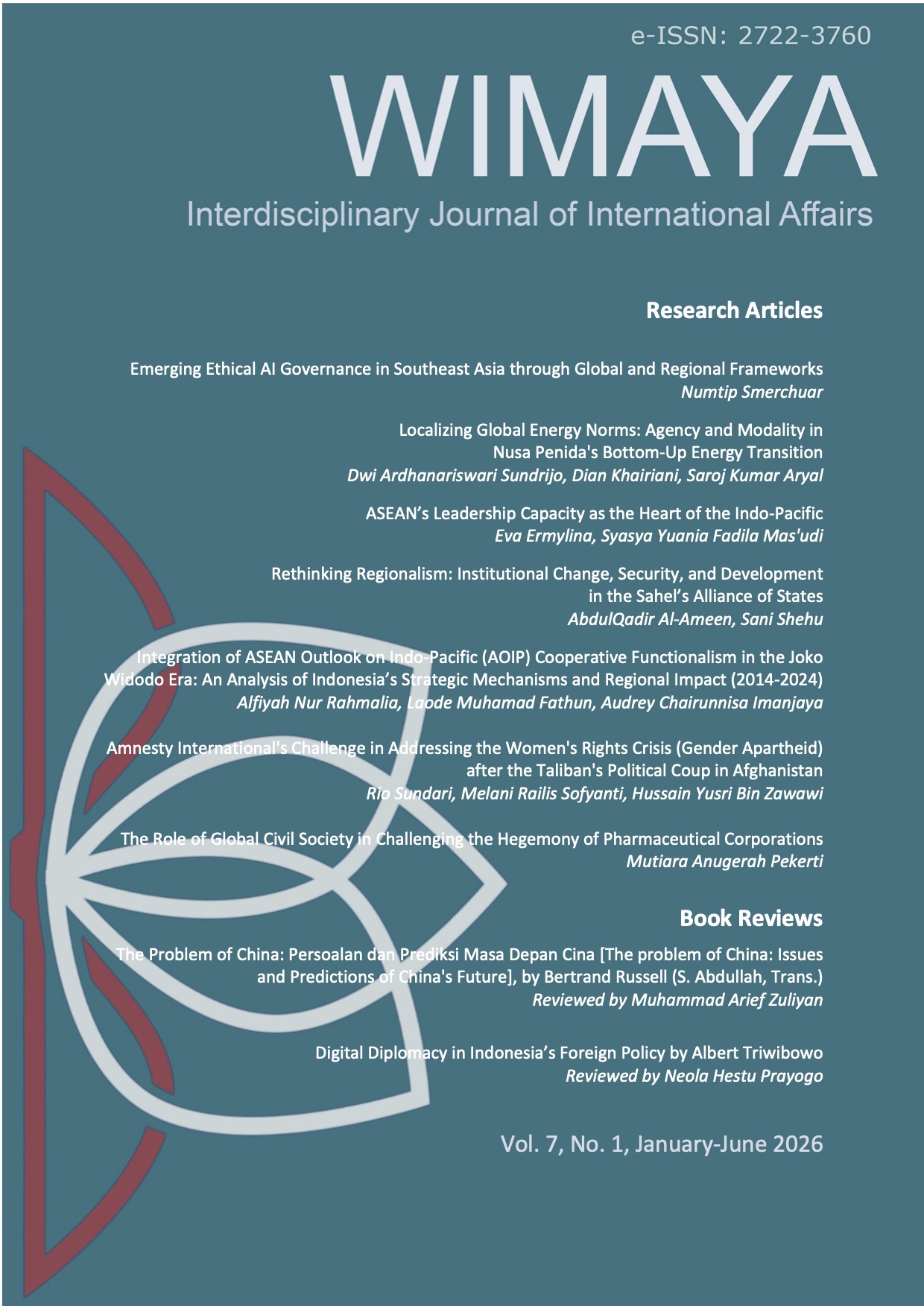
The Role of Global Civil Society in Challenging the Hegemony of Pharmaceutical Corporations
DOI:
https://doi.org/10.33005/wimaya.v7i01.375Abstract
This study examines how global civil society campaigns against the Agreement on Trade Aspects of Intellectual Property Rights (TRIPS) expose inequalities in global governance, particularly the dominance of developed countries and pharmaceutical corporations in setting international norms. The study highlights the impact of TRIPS implementation on access to essential medicines in developing countries and the role of civil society in challenging unequal power structures and driving transformation towards more equitable global governance. The case study of the generic drug access campaign and response to the COVID-19 pandemic shows how civil society is resisting through legal advocacy, public diplomacy, and transnational solidarity. On the other hand, this paper also evaluates the structural limitations of global justice mechanisms, such as the Doha Declaration and the TRIPS waiver, which are often insufficient to counter the dominance of global economic powers. This paper, through a critical approach, emphasizes the importance of strengthening civil society and championing inclusive, rights-based global governance.
Downloads
Downloads
Published
How to Cite
Issue
Section
License
Copyright (c) 2026 Mutiara Anugerah Pekerti

This work is licensed under a Creative Commons Attribution-ShareAlike 4.0 International License.